The sun was out this morning and spirits lifted. But not for long. By the time we had breakfast and made some food for Jo and Martyn it had started to rain.
Martyn stayed at the clinic with Jo last night. It’s not a hospital so no night staff, no bed sheets – everything disposable as there is no laundry. A nurse left her medication and when they returned in the morning her pain was extremely uncomfortable.
We sat chatting trying to lift her spirits but the medivac wasn’t able to arrive so Jo & Martyn were feeling a little stressed.
Lovely Pete, our boat man from yesterday and Amy, the very capable nurse called to see Jo and promised to bring them some dinner tonight.

We packed up and headed for the ferry to get us to Home Island. We have 3 nights at the historic Clunies-Ross home Oceania House built in 1893 built by the grandson of the original Scottish settler John who arrived in 1827after the islands were discovered by William Keeling in 1609.
The crossing took 30 mins. ( it would have taken the boys about 4 hrs to swim!) It was calm though rainy. Not like yesterday with waves that caused the boat to pitch up and down.

Gary, the house caretaker met us and gave us a short tour of the island. It’s very different to West is. There are more people here and the houses are very different. It’s a Muslim community so there is a call to prayer sounded five times a day. And there is no alcohol.
We drive through the wet streets- some closed due to flooding! Gary pointed out the attractions and the best places to swim. His wife Paula met us on arrival at the house and explained a little about how it’s run. There are 6 bedrooms 3 with ensuites the other 3 share 2 bathrooms. Ours – the Daphne room is large with old world furniture and a view of the garden.
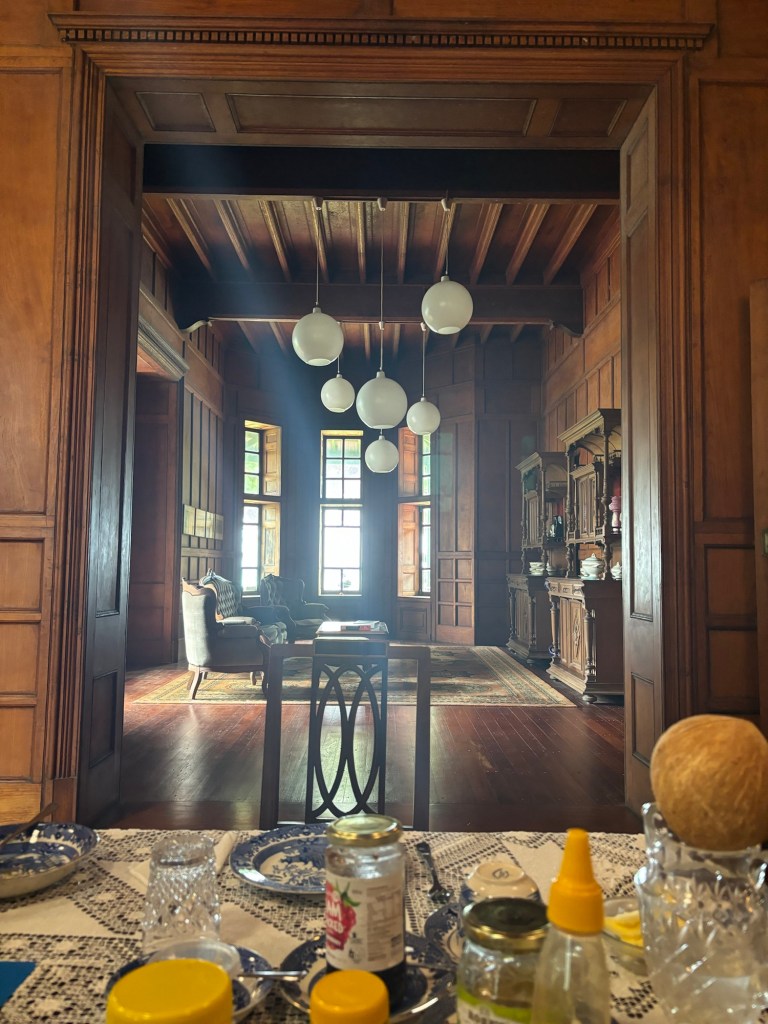

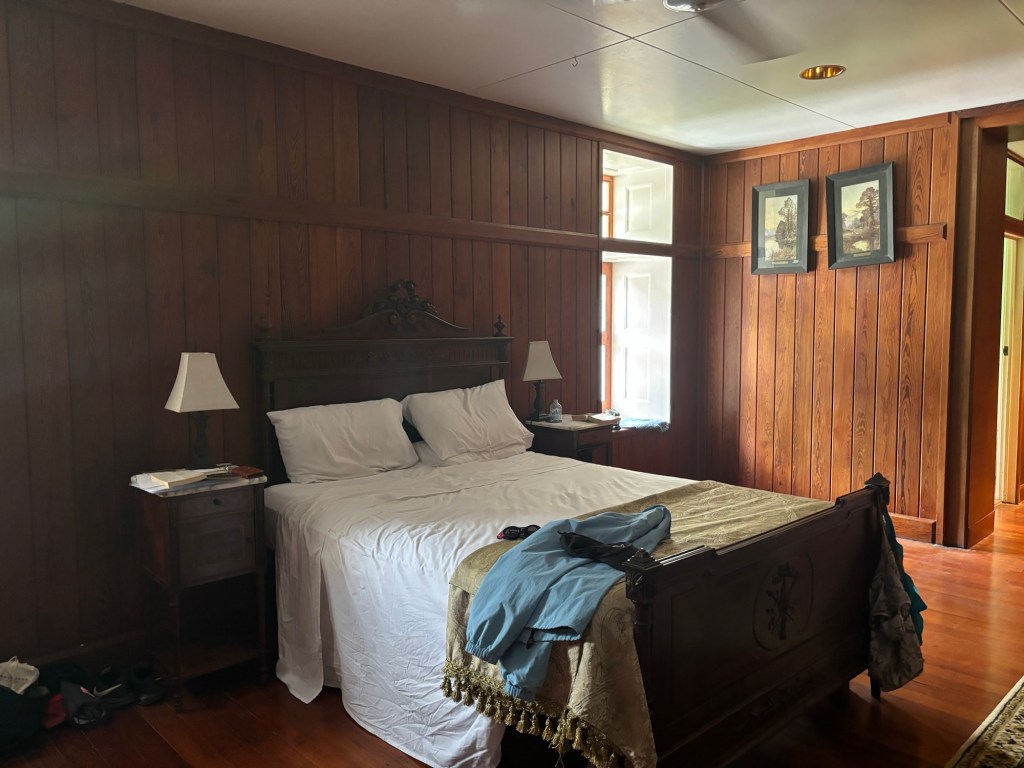
The lovely bedroom with a bathroom 70’s style! But functional.

There is a shared kitchen where you can keep your food and cook your meals. Or you can ask for a home cooked meal – they have a few Malay people who cook curries. We did that for tonight.
We unpacked and had a drink in our lovely room before going down for our curry. We shared the table with two other two couples.
Bruce and Natsuko from Perth and Wolf and Marion from Germany. The German couple in their late 70’s and 80 something are staying a month.
We had a little look around the house but are doing a tour with Gary tomorrow. He has all the historical details for us.
We miss our friends so much. Wish they were here enjoying this lovely old house. They are still stuck in the clinic wondering what’s going on. We’re all very worried for Jo.
Tomorrow we plan to go for a swim at a nearby beach. Even in the rain they said it’s beautiful and we’ll see turtles.


 frans travel tales